


 Book a time
 Get in touch
Acne scar treatment can feel confusing when the marks left behind don’t all look the same.
Some people have shallow dips. Some have deeper scars. Others have red marks, brown marks, or active acne at the same time.
That’s why treatment can vary from person to person. Scar type, skin type, pigment risk, active breakouts, downtime, and healing history can all affect what may be suitable.
This guide covers 7 acne scar treatment options that may be discussed after assessment. These are:
- Fractional CO2 laser
- RF microneedling
- Microneedling
- Subcision
- TCA CROSS
- Pico laser
- Vascular laser
It explains what each option may be discussed for, why scar type matters, and what risks should be considered before treatment starts.
This information is general only. It doesn’t replace medical advice.
1. Fractional CO2 laser
Fractional CO2 laser may be discussed when the concern includes selected indented acne scars or uneven skin texture.
This is a resurfacing laser. It uses focused laser energy on selected areas of the skin.
Because it can be more involved than some other options, recovery time needs to be considered early. Pigment risk needs careful review. This matters more if your skin gets dark marks after acne, irritation, or other inflammation.
Fractional CO2 laser isn’t usually discussed for active acne, red marks, or brown marks alone. These concerns may need a different plan.
Suitability can depend on the scar and the person’s skin type. Recent sun exposure, medical history, past treatment reactions, and recovery time also matter.
Redness, swelling, discomfort, or crusting may happen. Less common risks can include infection, delayed healing, pigment changes, or scarring.
A qualified health professional should explain the treatment first. They should also discuss recovery and other options.
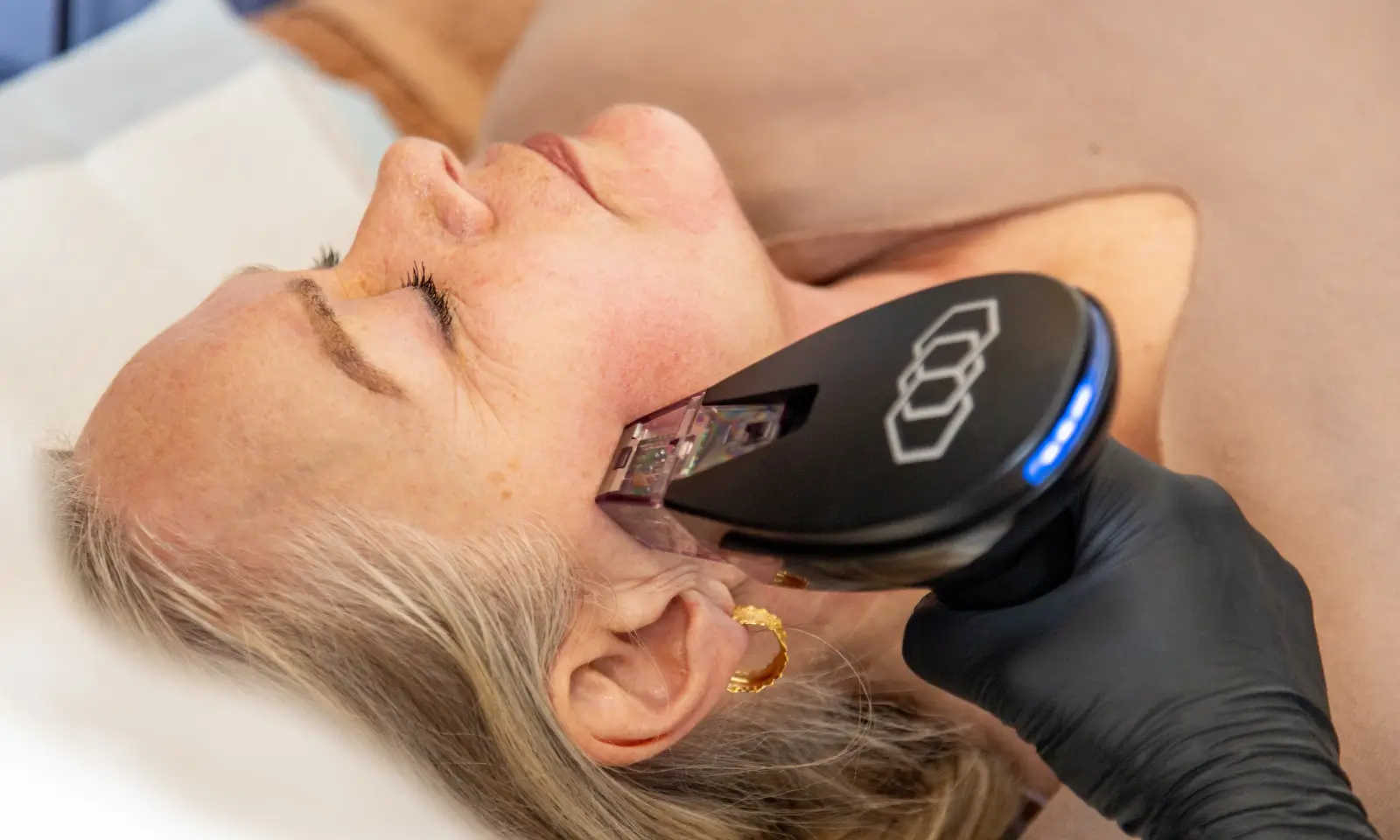
2. RF microneedling, including Morpheus8 where suitable
RF microneedling may be discussed when uneven texture, rolling scars, or some mild atrophic scars are part of the concern.
Morpheus8 is one type of RF microneedling device. It combines microneedling with radiofrequency energy.
This option is different from treatments used mainly for red or brown post-acne marks. Those marks may need a different approach.
RF microneedling uses fine needles in selected areas of the skin. The depth and energy settings should be chosen for the person’s skin, the concern being assessed, and the side effect risk.
Some people may notice redness, swelling, or tenderness after treatment. Pinpoint bleeding, bruising, dryness, or sensitivity may also occur.
RF microneedling may not suit irritated skin, active infection, or uncontrolled acne. It may also need to wait after recent sun exposure or with some medical conditions.
It may not suit people with some implanted medical devices.
A qualified health professional should check suitability first.
3. Microneedling
Microneedling may be discussed for some mild acne scarring or texture changes.
It uses small needles to create controlled channels in the skin. The depth should be chosen for the person’s skin and the concern being assessed.
This isn’t the same as at-home skin needling. In-clinic microneedling should be performed with appropriate training, hygiene, and aftercare.
This option may be discussed for mild texture changes. It may not be the right option for deeper tethered scars or pigment marks alone.
Microneedling may not be suitable when acne is active, inflamed, or infected. Extra care may also be needed when there’s a history of poor wound healing, pigment changes, or certain skin conditions.
Possible effects include redness, swelling, tenderness, pinpoint bleeding, dryness, peeling, or sensitivity.
4. Subcision
Subcision is different from resurfacing-based treatments. It isn’t usually used for red or brown post-acne marks alone.
It targets fibrous bands beneath the skin that can pull some acne scars downward. These scars may look like shallow dips or rolling areas because the skin is being tethered from below.
Subcision involves using a needle or small instrument under the skin to release selected scar tissue. It should only be performed by a trained health professional.
Bruising, swelling, tenderness, bleeding, lumps, infection, pigment changes, uneven healing, or scarring may occur. Some people may also need more than one stage of care.
Suitability depends on the scar type and skin thickness. Health history, medicines, healing history, and side effect risk also matter
5. TCA CROSS
TCA CROSS involves placing a high-strength acid into selected acne scars rather than treating the whole skin surface.
This technique is most often discussed for narrow, deep ice pick scars. These scars may behave differently from wider or more shallow scars.
The acid is placed into selected scars only. The clinician needs to check which scars are being treated and why.
TCA CROSS isn’t a general peel for the whole face. It should only be performed by a trained health professional.
Stinging, crusting, or redness may happen. Pigment may darken or lighten. In some cases, healing may take longer or the scar may widen.
Scar type, skin type, pigment risk, active acne, and aftercare all need to be reviewed before treatment is considered.
6. Pico laser for post-acne pigment
Pico laser is often linked with pigment concerns rather than indented acne scars.
In acne-related concerns, its role may be different from treatments that focus on scar depth or skin texture. Sometimes the concern isn’t the scar itself. It’s the brown mark left after acne has settled.
Post-acne pigmentation and acne scarring are different concerns, so they don’t need the same approach.
Not all pigmentation responds in the same way. Pigment can sometimes darken after laser or light-based treatment.
Skin type and pigment pattern should be reviewed first. Recent sun exposure, medicines, active acne, and past reactions should also be discussed.
Redness, swelling, or discomfort may happen. Pigment may darken or lighten. Less common risks can include burns, blistering, delayed healing, or scarring.
7. Vascular laser for red post-acne marks
Vascular laser may be discussed when the main concern is persistent redness after acne.
Red marks aren’t always true scars. They may be linked to inflammation or visible blood vessels in the skin.
That makes this option different from treatments used for indented scars or brown pigment marks.
The skin should be assessed first so redness isn’t treated as the wrong concern. Active acne may affect whether vascular laser is suitable. Recent sun exposure, skin type, and healing history may also matter.
Possible effects include redness, swelling, bruising, tenderness, crusting, pigment changes, blistering, burns, or scarring.
Why scar type and active acne still matter
Acne scars don’t all look the same.
Some look like small narrow pits. Some look like wider dips. Others may look like rolling texture, firm raised scars, or uneven skin texture.
Red marks and brown marks after acne can also look like scarring. They’re not always true indented scars. Red marks may be linked to inflammation or visible blood vessels. Brown marks may be pigment marks.
This matters because pigment, redness, active acne, and indented scars may need different plans.
Active acne matters too. Early acne care may help lower the chance of long-term scarring.
If breakouts are still active or inflamed, scar treatment may need to wait. Treating scars too early can irritate the skin and make the plan harder to review.
Where Rejuran may fit in a broader plan
Rejuran may be discussed in consultation for some people where appropriate.
It may have a role for some people, but not everyone. This depends on the concern, treatment goals, clinical assessment, and other options.
It shouldn’t be presented as a stand-alone fix for acne scars. It may be considered as part of a broader management plan where appropriate. That depends on the person’s concerns and treatment goals.
If Rejuran is discussed, the clinician should explain why it’s being considered. They should also explain the risks, limits, recovery, aftercare, and other options.
Why acne scar treatment may be staged
Acne scar treatment may be planned in stages.
This can happen when more than one concern is present. A person may have ice pick scars, rolling scars, pigment marks, and redness at the same time.
One treatment may be discussed for one concern, while another may be discussed for something else.
Staging can also give the skin time to heal before another treatment is considered.
The plan should be reviewed over time. It may change depending on healing, side effects, acne flare-ups, pigment changes, and the person’s goals.
When acne scar treatment may need to wait
Acne scar treatment may not be suitable straight away.
It may need to wait if acne is active, inflamed, or infected. Treatment may also need to wait after recent sun exposure or tanning. Some medicines or recent skin procedures may also affect timing.
Extra care may be needed for people with a history of keloid scarring, pigment changes, or poor wound healing. Certain medical conditions, pregnancy, or breastfeeding may also affect suitability.
Treatment suitability should be checked first. A qualified health professional should do this before any procedure starts.
Possible risks and side effects
Acne scar treatment can carry risks.
Redness, swelling, tenderness, or bruising may happen. Dryness, peeling, or crusting may also occur.
Some people may notice itching, sensitivity, discomfort, or acne flare-ups.
Less common risks include infection, burns, delayed healing, pigment changes, or scarring.
Darker marks, also called post-inflammatory hyperpigmentation, can happen after acne or skin trauma. They can also happen after laser, chemical peels, or some skin procedures.
Pigment risk should be discussed before acne scars are treated. Aftercare should be discussed, too.
A qualified health professional should explain the risks before treatment starts. They should explain recovery and aftercare. They should also discuss other options and what may happen if no treatment is done.
Questions to ask before acne scar treatment
Before acne scar treatment, it may help to ask:
- What type of acne scars do I have?
- Are my marks scars, pigment, redness, or active acne?
- Is treatment suitable for my skin type?
- What are the risks for my skin?
- What recovery should I expect?
- What aftercare will I need?
- Are there other options?
- What could happen if I choose not to treat the scars now?
- How will the plan change if my acne flares?
A consultation should give you time to understand the treatment. It should also cover the risks, limits, and likely recovery.
How acne scars may be assessed at Ascension
Consulting from his cosmetic clinic, Ascension Cosmetic Medicine, Dr Scott Allison’s acne scar assessment may include checking the type of scarring, skin type, active acne, pigment risk, treatment history, and healing history.
Your clinician may ask about current skincare and past procedures. They may also ask about sun exposure and medical history. Recovery time may be discussed too.
Photos or skin imaging may be used to help document the skin before treatment is planned.
The aim is to understand what’s present before any treatment option is discussed in detail.
Disclaimer
This article is general information only. It doesn’t replace medical advice, diagnosis, or treatment.
Acne scar treatment may not be suitable for everyone. Results, risks, recovery, and side effects can vary.
A qualified health professional should assess your skin first. They should explain the possible benefits, risks, limits, aftercare, and other options. They should also discuss what may happen if no treatment is done.
Reviewed by Dr Scott Allison (MED0001664087), Registered Medical Practitioner, specialist registration in General Practice.

 Book a time