


 Book a time
 Get in touch
Cosmetic medical care is different for every person.
Every face is different.
Skin thickness, fat layers, muscle movement, and blood vessel pathways vary from person to person.
Cosmetic history and natural differences in anatomy can also affect the tissue under the skin.
Most assessments begin with what can be seen and felt. A clinician looks at the skin, how the face moves, and how the tissue responds to light pressure.
This gives useful information for planning and follow-up. But some details can’t be checked from the surface alone.
Ultrasound guided aesthetics adds another way to assess an area. The scan gives a way to see what is under your skin.
This can support assessment of anatomical differences and other visible features in the area.
At Ascension, ultrasound may be used during consultation, planning, and when reviewing some concerns after care
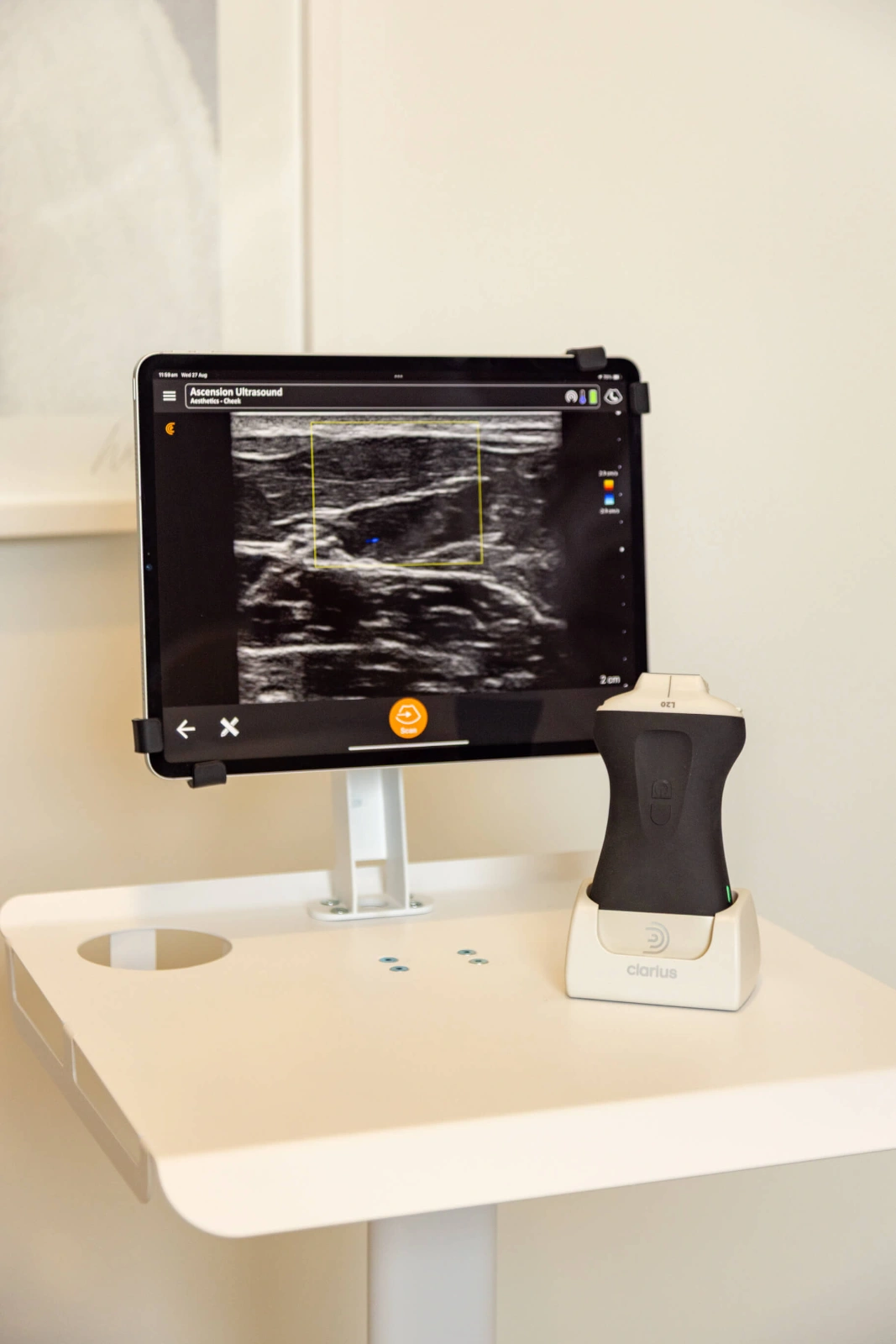
All plans are overseen by Dr Scott Allison. The clinic uses Clarius ultrasound equipment as part of this approach.
What is ultrasound guided aesthetics?
Ultrasound guided aesthetics uses ultrasound to view structures under the skin in real time.
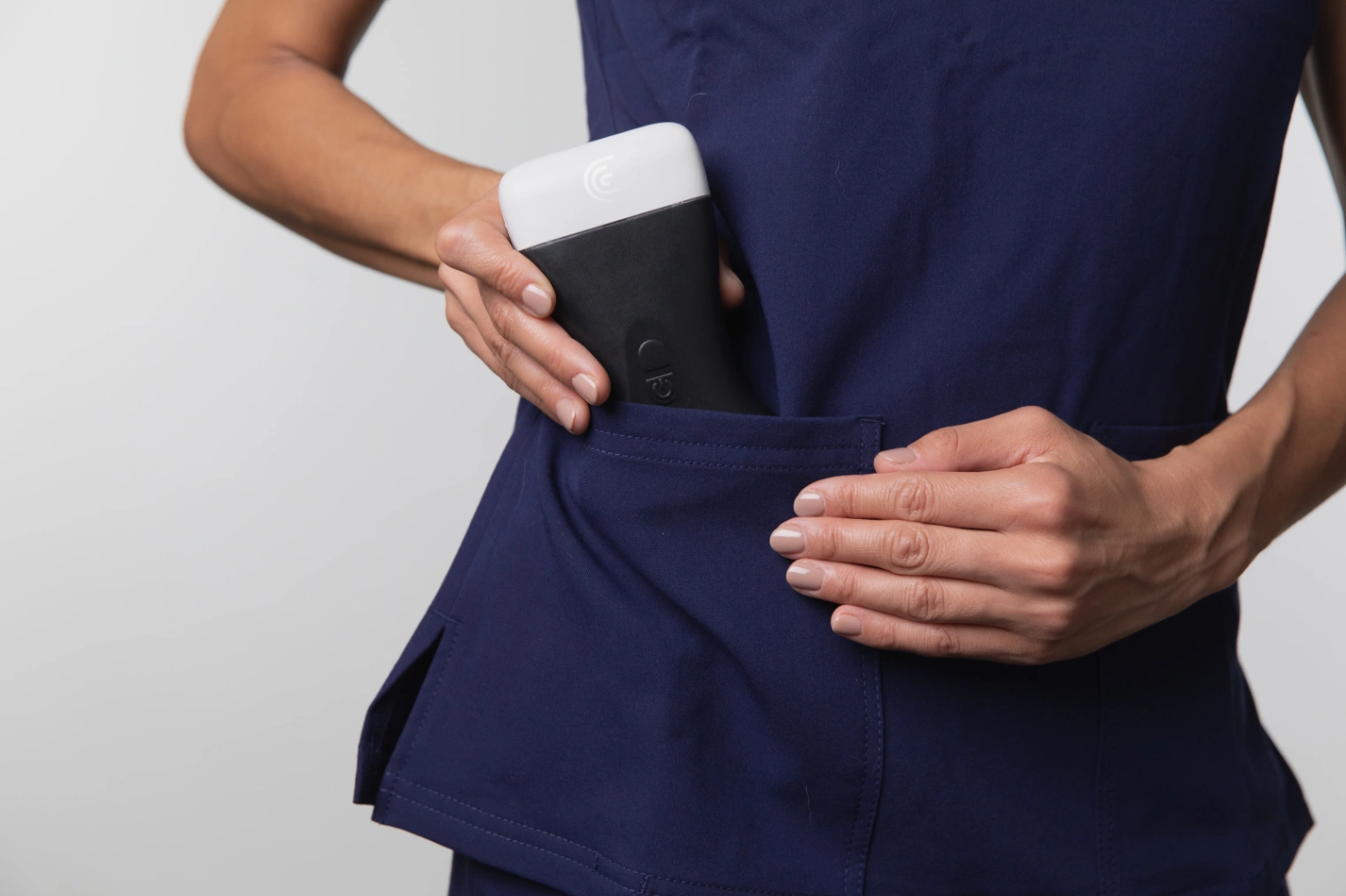
A small handheld probe is placed on the skin with gel. The gel helps sound waves move through the tissue.
The probe sends sound waves into the area and receives echoes back.
A screen shows an image based on those echoes.
The scan is a simple process for most people.
It is usually done on one specific area, not the whole face.
The aim is to check the area most relevant to the concern being assessed.
Depending on the area and the image, ultrasound may help show:
- tissue layers under the skin
- the location of some blood vessels
- other visible features in the area
With the Clarius wireless ultrasound system, clinicians may be able to see tissue layers and some blood vessels. In some cases, ultrasound may also show structural differences or other visible features in the area.

Why Ultrasound Matters in Aesthetic Medicine
The face has many structures close together.
Blood vessels, muscles, fat, and connective tissue sit in layers.
The depth and position of these layers can vary from person to person.
Cosmetic history and natural differences in anatomy can also affect the tissue.
Without imaging, a clinician uses what they can see and feel, along with their knowledge of typical anatomy. With ultrasound, they may be able to check what is visible in that area at that time.
In the right situations, ultrasound may help by:
- checking what is present before planning
- locating some blood vessels in the area
- reviewing visible features in the area
- supporting some clinical decisions when imaging is appropriate
Ultrasound is not needed for every appointment. It is used when it is likely to add useful information.

Ultrasound guided aesthetics and planning
In cosmetic medicine, there are different ways to manage a concern.
Some focus on the skin surface, such as skincare, peels, or device based care.
Other options involve deeper assessment or structural planning. A plan may use one approach or a combination, depending on what is found.
Ultrasound can support planning by giving more detail about the area being assessed.
Planning for your anatomy
Textbooks describe average anatomy. Real anatomy varies.
Ultrasound can help a clinician see how the tissue layers look in a specific area for you. This can support discussion about:
- where certain layers sit in that area
- how thick or thin the tissue appears
- where some blood vessels appear to run
- whether the area looks typical or has features that may affect planning
This does not replace clinical judgement. It adds more information.
Checking areas with previous cosmetic history
Many people have a cosmetic history where full details may no longer be available.
Details from earlier care are not always known. Records may also be unavailable.
If visible features are seen on ultrasound, a scan may help show where they appear to sit in the area.
This can affect the next discussion. It can also support a more careful plan when needed.
Doctor-Led Care at Ascension
Ascension is a doctor-led clinic. All aesthetic plans are overseen by Dr Scott Allison.
Ultrasound is used as part of a full clinical assessment. This includes medical history, physical examination, and discussion of options.
If a scan is recommended, your clinician may explain:
- why the scan is being done
- what area is being checked
- what is visible on the scan
- what the scan cannot confirm
- whether the findings change the plan
This supports informed consent. It also helps create clinical notes about what was seen at the time.
Ultrasound when checking concerns after treatment
Ultrasound is used in many medical settings. In aesthetic medicine, it can also help when someone has concerns after cosmetic care.
A person may notice swelling, firmness, unevenness, or a lump in an area. These changes may appear soon after care or develop over time.
Causes can include normal healing changes, inflammation, or other changes in the tissue.
A scan does not give an answer on its own. It gives more information to help guide the next step. Depending on what is visible, ultrasound may help a clinician:
- look more closely at tissue changes in one area
- review visible features in the area
- compare different tissue findings
- record what is seen for future comparison
- decide on follow-up timing
Helping people understand the plan
Ultrasound can also support education during a consultation.
Seeing the area on a screen can make the discussion easier to follow. It helps keep the conversation based on what is visible, rather than only on diagrams.
Questions are encouraged at Ascension. If imaging is used, the clinician can explain what they can see, what is uncertain, and how this relates to your options and risks. This supports informed consent.
Not everyone needs the same approach for the same concern. A consultation is required before any care is offered. Ultrasound may form part of that assessment when it is likely to add useful information.
Is ultrasound guided aesthetics right for me?
Ultrasound is not needed for everyone.
Whether it is used depends on your history, the area being assessed, and whether imaging is likely to affect planning or follow-up. It may be helpful when the area is complex, the history is unclear, or assessment is needed.
During your consultation, your clinician will discuss whether ultrasound is useful in your case. In some situations, a physical examination is enough. In others, a scan may add helpful detail.
Real Time Guidance and Clinician Education
Ultrasound can also support education during consultation.
For many people, seeing the scan in real time makes the discussion easier to follow. It can also help keep the conversation focused on what is visible, rather than relying only on diagrams.
At Ascension, questions are encouraged. Education is part of informed consent. Ultrasound can support open discussion about:
- what is known based on examination and imaging
- what remains uncertain
- possible risks linked to a proposed treatment
- the limits of what can be confirmed
The aim is to help people understand what is being assessed and how decisions are made.
Support for people with previous treatments
Many people have a complex cosmetic history involving the face.
Over time, anatomy changes. Earlier cosmetic care can also affect tissue structure. These changes are not always visible from the outside.
Ultrasound guided aesthetics can help review what appears to be present before future planning is discussed. This can support conversations about:
- what can be seen on the scan
- what cannot be confirmed
- whether the area appears simple or more complex to plan around
- whether a careful approach is needed
A consultation is always required before care. Ultrasound may be included when it is likely to add useful information.
If you have past records, it can help to bring them. If you do not, assessment can still go ahead based on current findings.
A More Informed Path Forward
Ultrasound guided aesthetics adds a way to look beneath the skin during consultation and planning. It can support treatment planning and complication assessment when appropriate.
At Ascension, ultrasound is used within doctor-led care. When clinically relevant, it can provide additional information to guide discussion and follow-up.
Ultrasound may also support a more straight forward documentation during the consultation process.
When a scan is used, it can help record what was visible in that area on that day.
This may be useful when comparing future reviews, especially if the area changes over time or if further assessment is needed later.
It can also help keep discussions grounded in current findings rather than assumptions.
In a field where anatomy, treatment history, and tissue response can vary, having another source of clinical information can support careful decision making.
This does not mean ultrasound is required in every case.
It means that, in selected situations, it may add context that supports a straight forward communication and more informed follow-up.
Outcomes may vary between patients and do not reflect the results other patients may have.
If you would like an assessment, a consultation with the clinical team is the appropriate place to start.

 Book a time